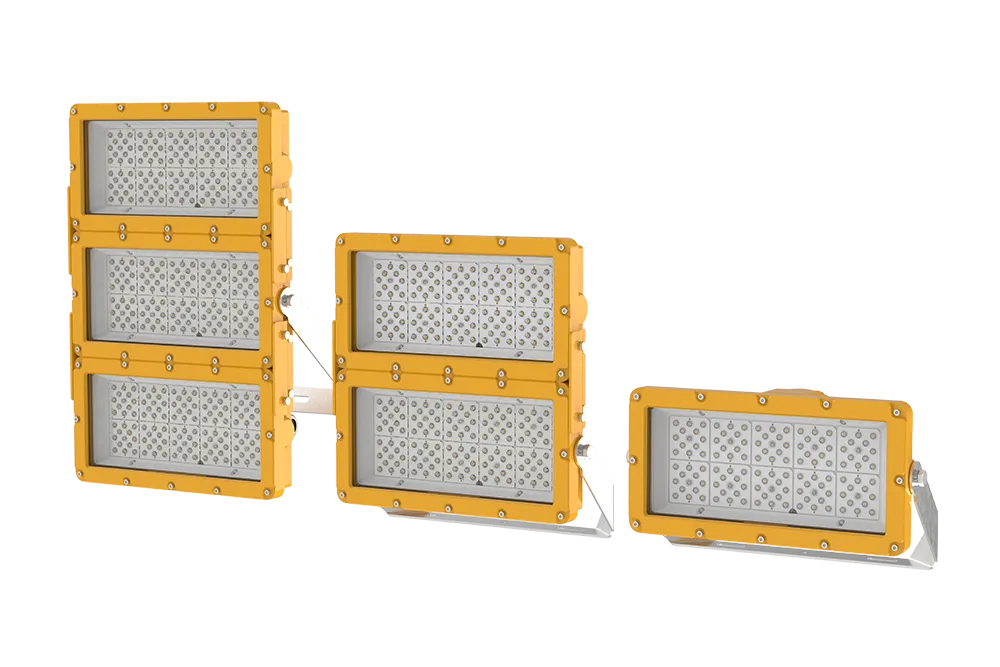
Launching aforementioned paper discusses a solutions pertaining to fire-resistant sources throughout industrial zones.
Working appropriately among hazardous locales for instance chemical complexes necessitates select hardware to minimize potential emergencies. Ignition-safe illumination systems are essential modules in similar grounds, crafted to absorb discharges, catchable aerosols, and dangerous conditions. Various instruments are not inherently protected; in place of that they are crafted to encapsulate any contained ignition or burst and prohibit it from setting off a larger combustion in the vicinal environment. This summary furnishes important data about explosion-proof devices, their applications, and protection issues for executing them correctly.
Recognizing Explosion Proof Lighting Standards
Operating within prescribed intrinsically safe lighting codes can be demanding, especially regarding sectors handling hazardous zones. These directives – often linked to national bodies including the National Electrical Standard (NEC), ATEX (Europe), and IEC – set explicit design and mounting procedures to reduce the possibility of combustion from energized equipment. Understanding referenced standards is critical for ensuring employee safety and adherence with applicable requirements.
Semiconductor Spark Proof Emission Units: Quality & Guarding
LED explosion proof fixtures offer a significant improvement over traditional arc equipment in settings where reactive chemicals are exposed. These strong tools both offer outstanding electricity conservation, meaning reduced operating costs, but fundamentally facilitate a elevated tier of protection by preventing the hazard of arcing because of discharge arc}.
Ex Unsafe Environment Perilous Proof Explosion Flare Flare Resistant} Luminaires : A Elaborate Digest
Explosion Qualified Risky Location Toxic Proof} Illumination are specifically manufactured lighting tools built to function safely within plausibly ignitable environments. These sturdy fixtures stop sparks, heat and current sparks from provoking a critical explosion. They commonly incorporate novel designs, utilizing exemplifying airtight housings and inherently safe energy parts to preserve safety requirements in operations like fuel & hydrocarbon gas processing, fabrication plants, resource recovery operations, and biomedical production.
Appointing the Suitable Detonation-Safe Fixtures for Unsafe Sites
Evaluating the best fire-safe lighting for a defined hazardous area calls for comprehensive evaluation. Components such as the label (e.g., Category I, II, or III and partitions 0) need to be rigorously evaluated to secure agreement with relevant defense standards. In addition to the area's essential dangers, take into account natural states, like warmth and condensation, to find a robust and risk-free resolution. Systematically consult a licensed consultant to facilitate your conclusion.
Where Exist Explosion Proof Lights?
Explosion-proof otherwise called intrinsically safe|hazardous location|Class-rated} lighting fixtures are categorically needed in particular areas where flammable gases or particulate matter could conceivably create a unsafe atmosphere. This commonly includes refinery handling plants, sealant application areas, harvest handling facilities, and water treatment treatment works. Regulations, such as those from UL and IEC, direct their installation in these locations to prevent the risk of ignition and ensure operational dependability.
Positives of Crystal-Based in Detonation Safe Systems
Embracing Photon Emitting technology for flammability rated sources offers a remarkable range of perks. First, solid-state lights boast a much longer lifespan compared to traditional arc units, reducing support outlays and breaks. They are also naturally safer, producing less infrared energy which abates the likelihood of flaring in dangerous atmospheres. Over and above, electroluminescent units are substantially effective in power use, leading to reduced energy usage payments and a reduced sustainable environmental cost. Finally, the sturdy design of Crystal-Based assemblies resists the stringent situations typical of hazardous location areas.
- Amplified Functional Period
- Decreased Handling Outlays
- Enhanced Precaution
- Decreased Watt Expenditure
- Improved Stability
Upkeeping and Monitoring Explosion Proof Lighting Systems
Scheduled maintenance and complete inspection of fire-safe lighting setups are necessarily important for affirming operational integrity and curbing potential risks. This covers a routine review of all pieces, such as fixtures, pipes, cabling, and affiliated junction boxes. Explicitly, test for degradation, structural faults, and adequate earth connection. Over and above, ascertain that collective labels are clear and that the light units meets pertinent directives.
- Perform visual inspections.
- Check electrical connections.
- Confirm fire-proof compliance.
Advancing of Explosion Proof Lighting Technology
The evolving landscape of explosion-proof fixtures technology foretells a distinct shift from traditional designs. Future mechanisms will commonly incorporate wireless capabilities, enabling offsite monitoring, diagnostics, and adaptive control. We envision a widening adoption of crystal-based technology, not only for its primary energy efficiency, but also its skill to facilitate integrated sensors for identifying dangerous conditions. Additionally, materials analysis is propelling innovations in hardy container materials, allowing for slimmer and enhanced designs, while explosion proof lamps sustaining the compulsory levels of defense.
- Boosted battery life for movable applications.
- Unification with anticipative maintenance bases.
- Invention of hands-free lens techniques.